
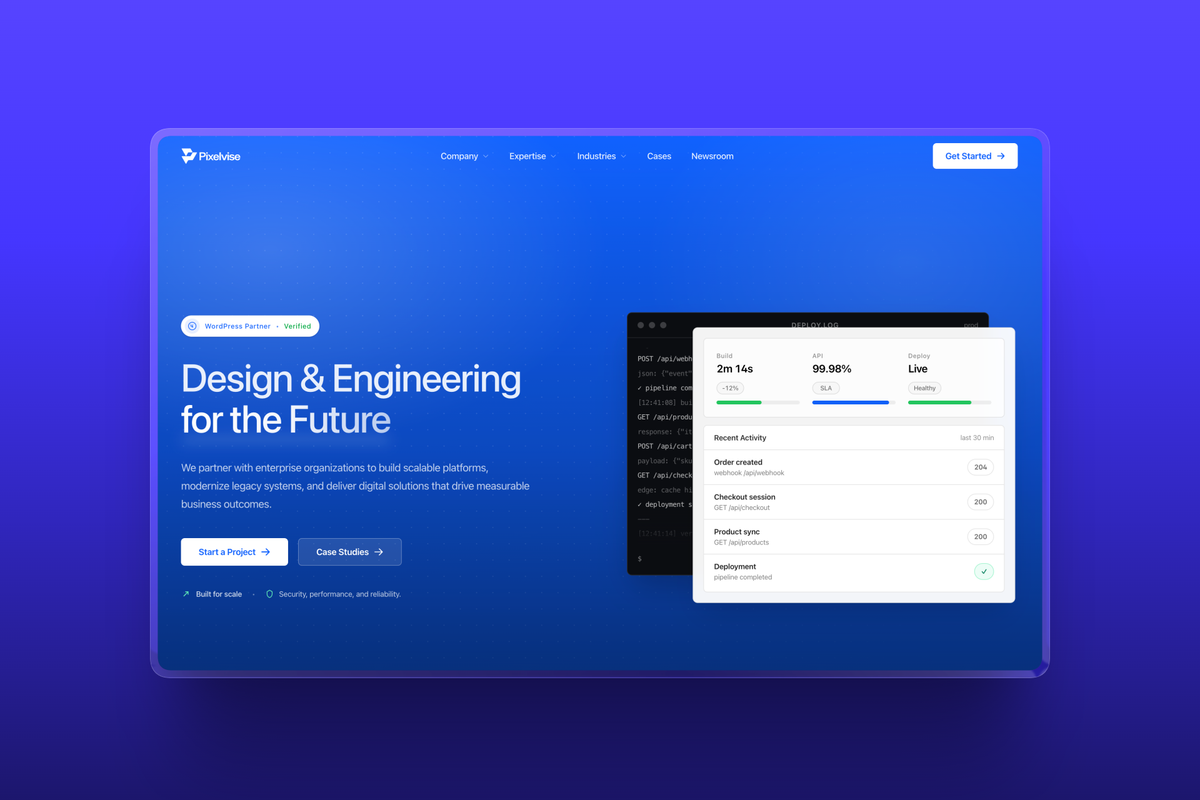
Pixelvise.com is not a traditional marketing website. It is designed and engineered as a production-grade digital system — optimized for performance, clarity, maintainability, and long-term evolution.
This article documents the technical decisions, architectural structure, and systems that power the Pixelvise website.
Architectural Overview
Pixelvise.com is built as a static-first, systems-driven platform. The core principle behind the architecture is to minimize runtime complexity while maximizing performance, reliability, and editorial flexibility.
The site is composed of four primary layers:
Presentation layer (design system and UI)
Application layer (Astro framework)
Content layer (Sanity CMS)
Delivery layer (Cloudflare Pages and CDN)
Each layer is deliberately decoupled, allowing independent evolution without cascading technical debt.
1. Framework and Application Layer — Astro (Static-First Architecture)
The site is built using Astro, chosen for its static-first rendering model and minimal JavaScript footprint.
Key characteristics of the Astro setup include:
Pages rendered at build time
JavaScript shipped only where explicitly required
Component islands used selectively for animations and interactions
No client-side framework lock-in
This approach ensures extremely fast initial load times, predictable performance, reduced attack surface, and long-term maintainability.
The site is configured with static output, ensuring it remains CDN-friendly and deployable without a server runtime.
2. Design System: Pixelvise Atlas
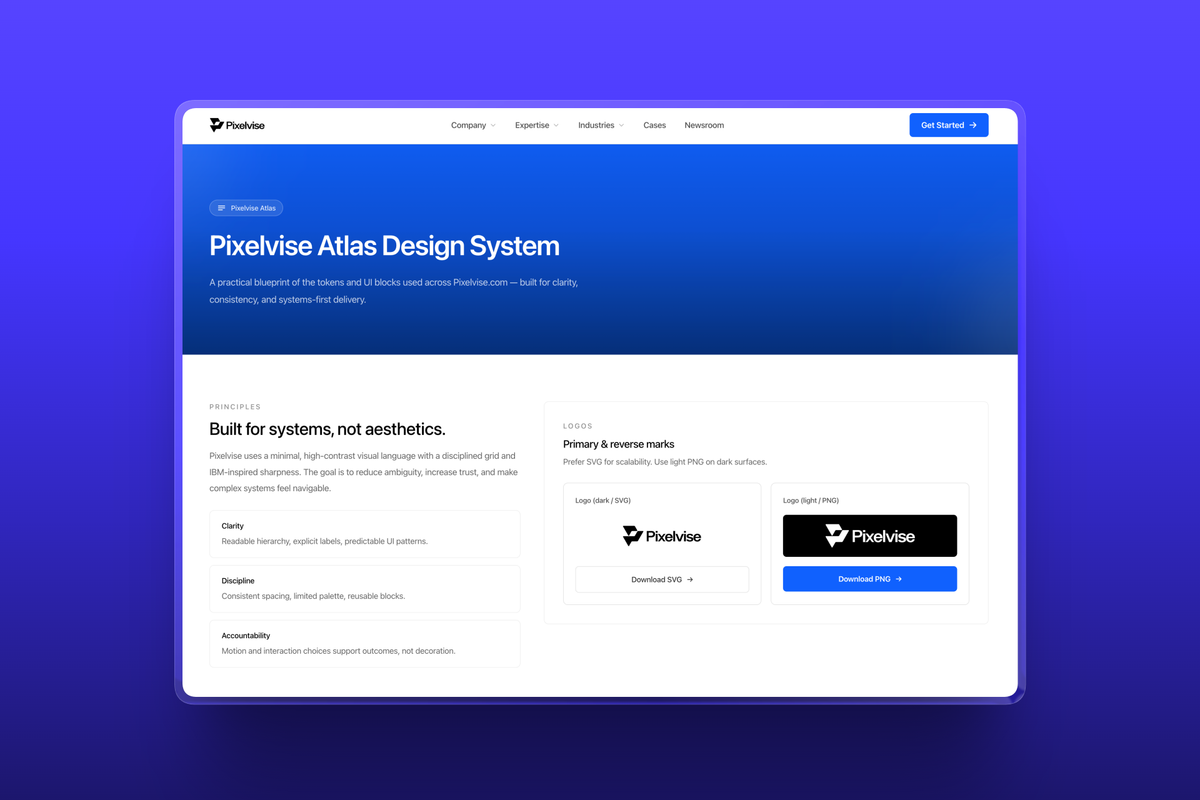
The interface is governed by the Pixelvise Atlas Design System, an internal system that defines visual, structural, and behavioral rules across the platform.
Learn More about The Atlas Design System →
Atlas is not a component library alone. It functions as a design and engineering contract, ensuring consistency across layout, typography, motion, and interaction patterns.
3. Color System
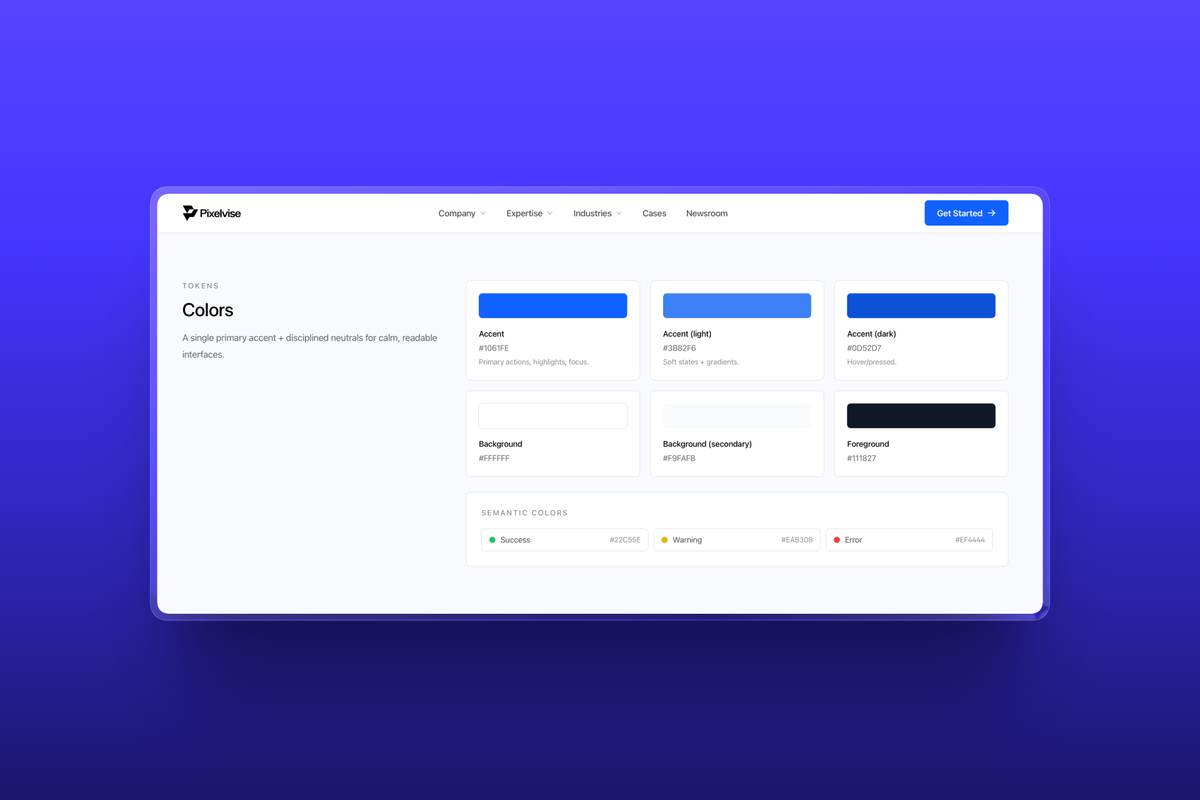
The color palette is intentionally minimal and functional.
Accent (#1061FE)
Used for primary actions, highlights, and focus states.
Accent (Light) (#3B82F6)
Used for soft UI states, subtle gradients, and secondary emphasis.
Accent (Dark) (#0D52D7)
Used for hover states, pressed states, and high-contrast interactions.
Background (#FFFFFF)
Primary canvas.
Background (Secondary) (#F9FAFB)
Used for section separation and depth.
Foreground (#111827)
Primary text color and UI contrast.
All colors are defined as system-level CSS variables, ensuring consistency and easy iteration across the interface.
4. Typography System
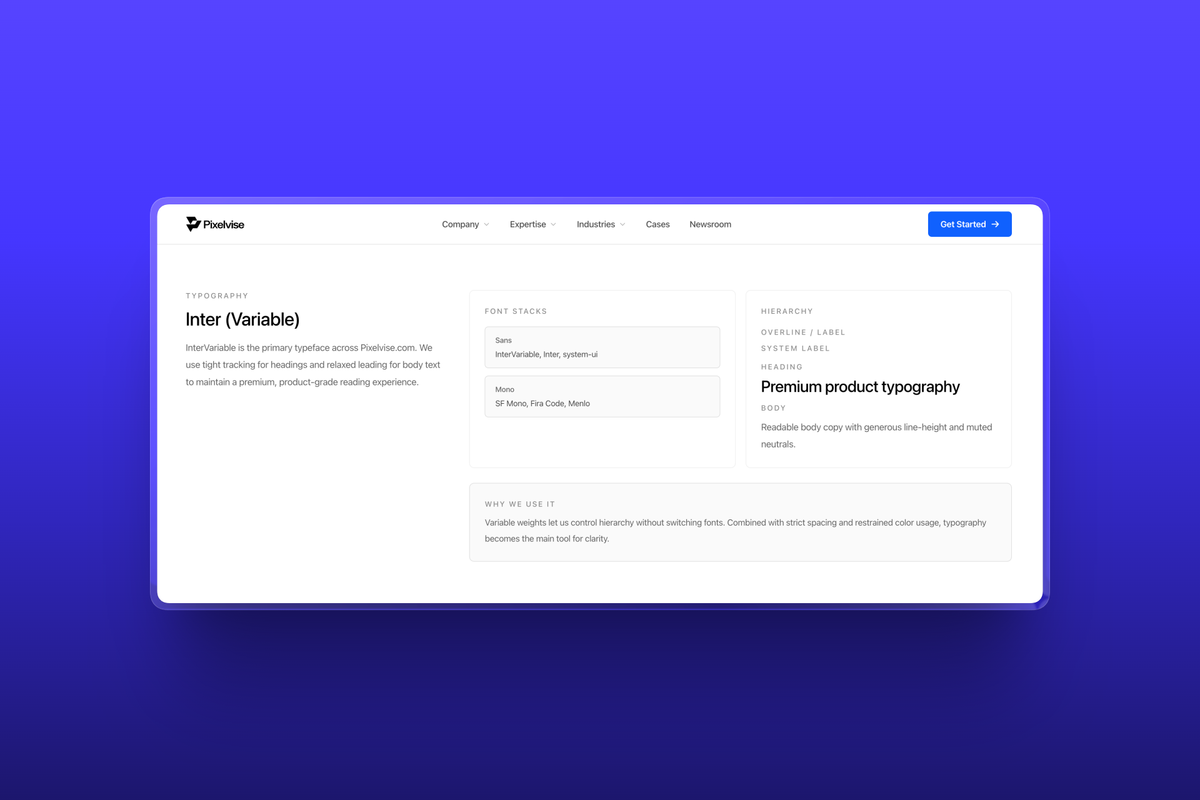
Pixelvise.com uses Inter Variable as its primary typeface.
Primary Typeface
Inter Variable
Font Stacks
Sans: Inter Variable, Inter, system-ui
Mono: SF Mono, Fira Code, Menlo
Typography principles include tight tracking for headings to convey precision, relaxed leading for body text to improve readability, and a clear typographic hierarchy without decorative excess.
Monospaced fonts are used intentionally for system logs, deployment outputs, and technical UI elements, reinforcing the engineering-first tone of the site.
5. Component and Layout Strategy
Layouts are composed using a small set of structural primitives:
Containers
Sections
Grids
System cards
Rather than creating dozens of bespoke components, Atlas favors composability. Most interfaces are constructed from predictable building blocks, reducing visual drift and maintenance overhead.
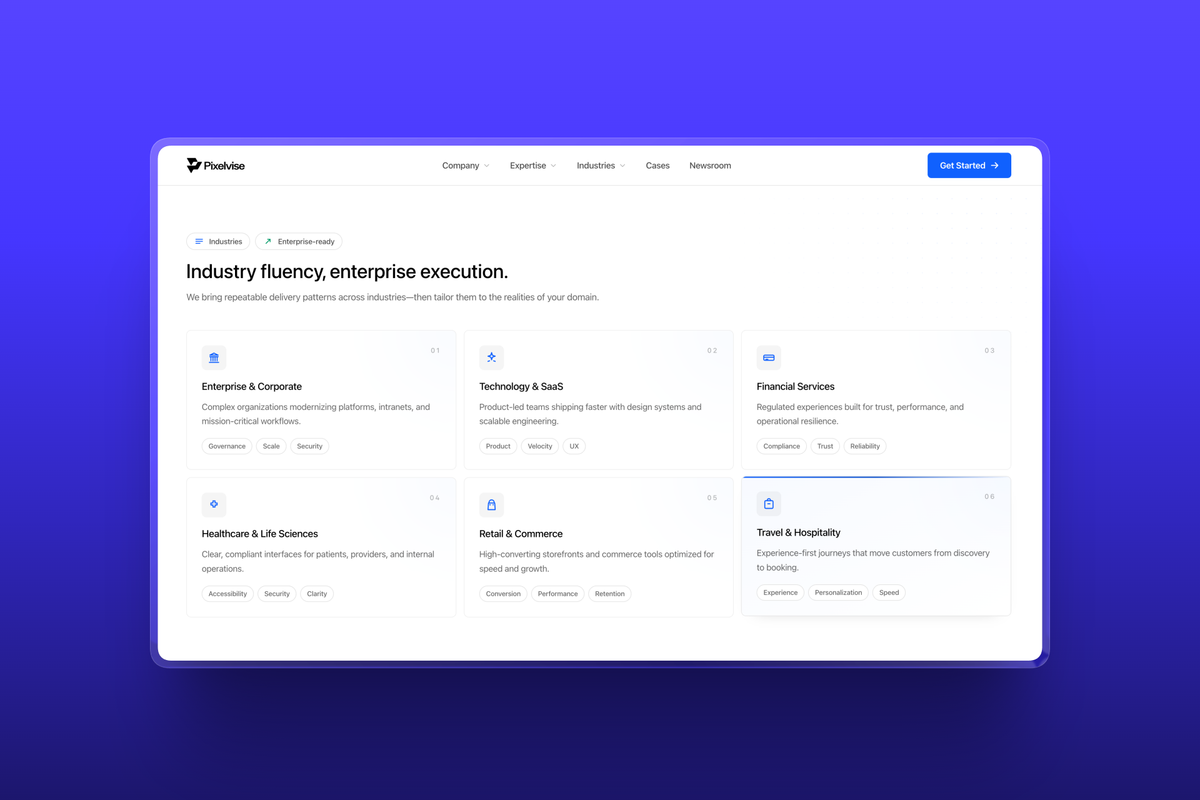
Motion is used sparingly and purposefully to communicate state and flow rather than decoration.
6. Animation and Interaction
Animation is implemented selectively using GSAP and isolated to opt-in components only.
Core principles include:
No animation without intent
No layout shifts
No performance compromise
Animated elements include system maps, directional data flows, and state transitions. All animations degrade gracefully if disabled and never block content or interaction.
7. Content Layer: Sanity CMS
Content management is handled via Sanity, used strictly as a headless content layer rather than a page builder.
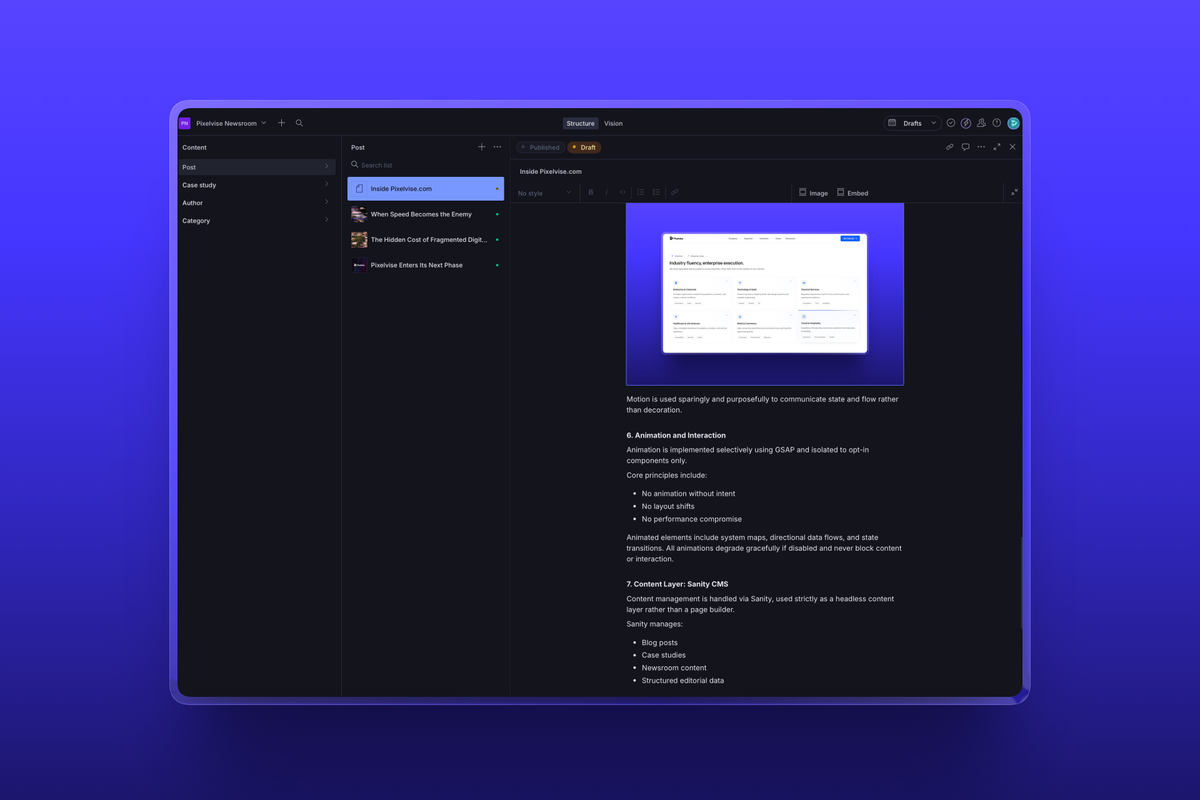
Sanity manages:
Blog posts
Case studies
Newsroom content
Structured editorial data
8. CMS Integration Model
Sanity content is queried at build time and rendered statically into Astro pages. There is no runtime CMS dependency for site visitors.
This approach provides editorial flexibility while maintaining static performance and predictable deployments.
9. CMS Structure
Content is modeled explicitly, not loosely.
Examples include:
Blog posts with structured SEO fields
Case studies with defined sections
Reusable content blocks
SEO metadata is integrated into each content type and passed directly into the site’s global SEO system.
Any content update triggers a rebuild, ensuring all published content reflects a known, versioned state.
10. SEO and Metadata System
SEO is handled through a centralized, code-first approach.
Global defaults are defined at the application level, page-level overrides are passed via props, and CMS-driven SEO is used for editorial content.
Every page includes a defined title, meta description, canonical URL, and Open Graph metadata. No SEO plugins or runtime injections are used.
11. Delivery and Infrastructure: Cloudflare Pages
Pixelvise.com is deployed on Cloudflare Pages for global distribution, simplicity, and reliability.
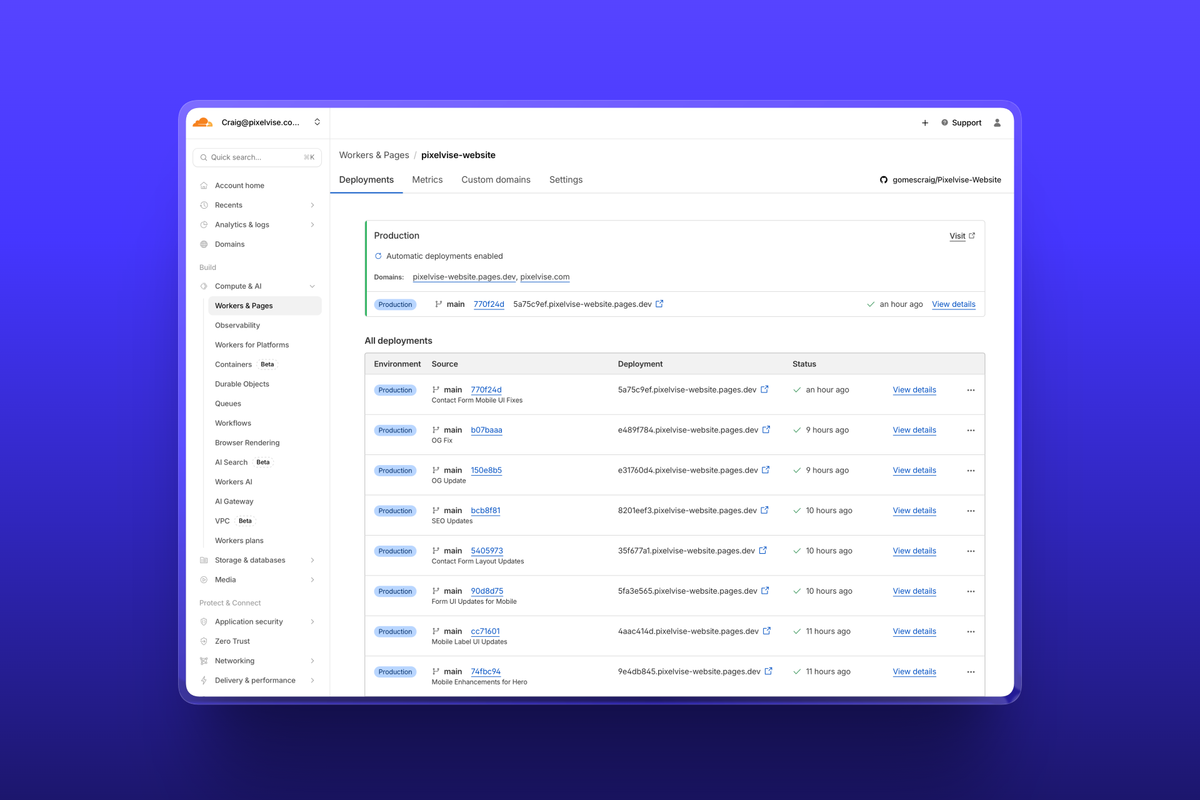
Deployment flow:
Source code hosted on GitHub
Automatic builds triggered on commit
Static output deployed to Cloudflare Pages
Global CDN distribution enabled by default
This setup provides instant rollbacks, preview deployments, and zero server maintenance.
12. Performance and Security
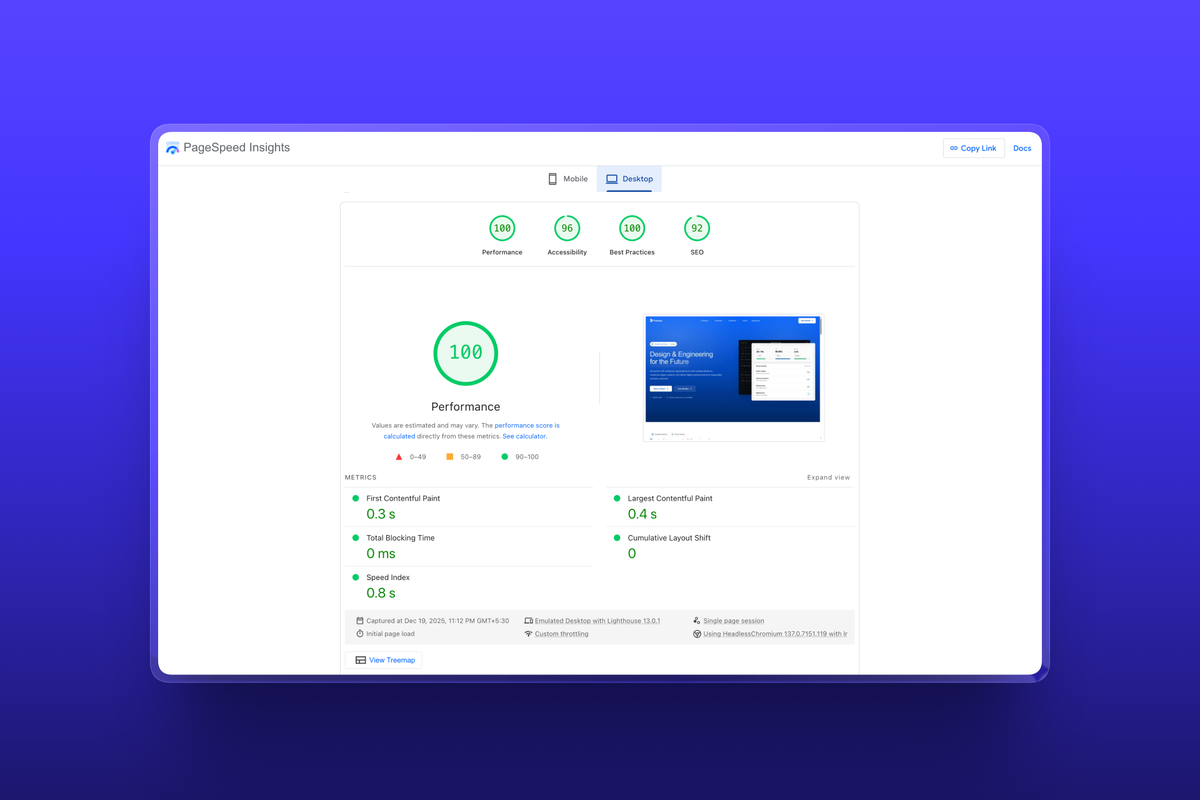
Cloudflare provides edge caching, HTTPS by default, HTTP/3 support, DDoS protection, and Brotli compression.
Because the site is fully static, there is no server-side attack surface, no runtime database exposure, and minimal operational risk.
13. Forms and Submissions
Forms on the site use a serverless, email-based submission flow, intentionally avoiding complex backend systems, we use https://formsubmit.co/
Submissions are delivered directly to email, reducing data storage liability, maintenance overhead, and security exposure.
14. Why This Architecture Works
Pixelvise.com is engineered using the same principles applied to production systems: clear boundaries, minimal coupling, predictable behavior, and long-term maintainability.
It is not optimized for trends or tools, but for clarity and durability.
Closing Thoughts
Pixelvise.com reflects how we approach digital systems: deliberately, systematically, and with respect for complexity.
The technology stack is intentionally restrained. The design system exists to reduce variance. The infrastructure prioritizes reliability over experimentation.
This is not a website built to impress at first glance.
It is a system built to perform consistently over time.